August 4, 2026
With housing at record highs, the question is no longer whether to invest but where. When prices are rising almost everywhere, the difference between a good and a bad investment comes down to the city, the neighborhood, and the relationship between what you pay and what you can charge in rent. Here's the map we're working with in 2026.
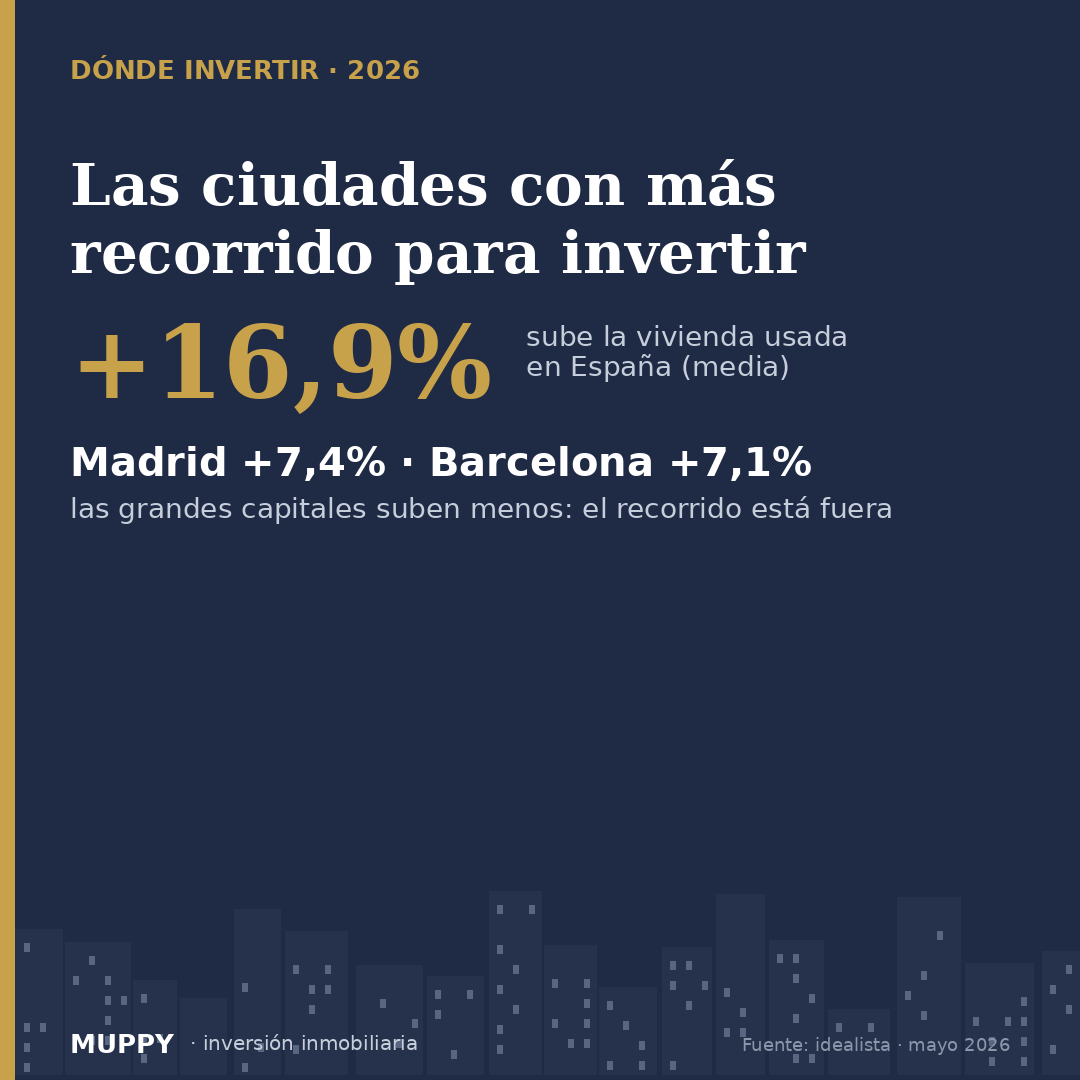
It may sound counterintuitive, but the greatest upside today isn't in Madrid and Barcelona. According to idealista, in May 2026 second-hand home prices rose 16.9% year over year on average across Spain, but in the big capitals the increase was more contained: 7.4% in Madrid and 7.1% in Barcelona. These are expensive, mature markets, where rental yields tend to be tighter and, for rentals, constrained by caps in stressed zones.
The upside lies in the cities that combine solid demand with more reasonable entry prices. The Mediterranean arc — Valencia, Alicante, Málaga and their surrounding areas — brings together residential, professional and tourist demand, with rental yields typically higher than Madrid's or Barcelona's. It's no coincidence that foreign capital concentrates there: foreign buyers signed around 18% of mortgages in the Valencia region, well above the national average.
These markets offer something valuable to the investor: prices that haven't yet peaked and a diversified rental demand that lowers vacancy risk.
We analyze the metropolitan areas with the greatest potential for return and appreciation using a proprietary valuation model, and we operate in five of them. Our open opportunities reflect exactly this thesis: deals in Valencia and its surroundings (such as Puerto de Sagunto, with a target return of 8.5%) or in Madrid, always selecting the asset by its numbers, not by the city's label.
Want to know which city fits your goal? Calculate net yield with our calculator and talk to an advisor to design your investment plan.
Generally, in second-tier capitals and the Mediterranean arc (Valencia, Alicante, Málaga and their areas), which offer a better price-to-rent ratio than Madrid and Barcelona, more expensive and mature markets.
They can fit a long-term appreciation strategy, but their rental yields tend to be tighter and, for rentals, constrained by caps in stressed zones. It all depends on the specific asset.
Look at the price-to-rent ratio, the diversity of demand, the local regulatory framework and the room to appreciate. A city with prices not yet at their peak and solid demand usually offers better upside.